
Monthly Bookkeeping Checklist for Small Businesses
Many small businesses only review their finances during tax season. That’s a mistake. Completing bookkeeping tasks monthly allows you to:
3/30/20264 min read
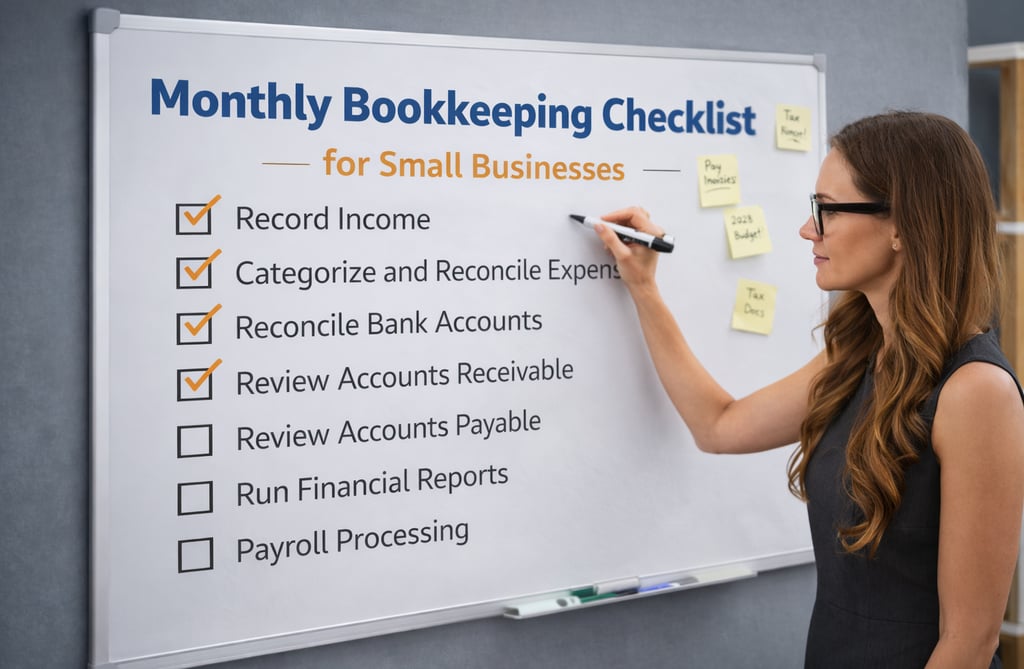
Monthly Bookkeeping Checklist for Small Businesses
Running a small business means managing sales, customers, and daily operations. Unfortunately, bookkeeping is often pushed aside until tax season arrives.
That’s where a monthly bookkeeping checklist becomes essential.
Completing a few key financial tasks every month keeps your records accurate, helps you understand your business finances, and prevents costly mistakes later.
This guide explains the monthly bookkeeping checklist every small business should follow.
What Is a Monthly Bookkeeping Checklist?
A monthly bookkeeping checklist is a list of financial tasks small businesses complete each month to keep their accounting records accurate and organized.
These tasks typically include:
Recording income and expenses
Reconciling bank accounts
Reviewing financial reports
Tracking unpaid invoices
Organizing financial documents
Completing these tasks monthly helps ensure your business finances stay accurate and tax-ready.
Why Monthly Bookkeeping Matters for Small Businesses
Many small business owners only review their finances once a year when filing taxes. That approach often leads to errors and financial confusion.
Completing bookkeeping tasks each month helps you:
Stay organized
Accurate records prevent missing transactions and financial confusion.
Understand cash flow
Monthly bookkeeping shows how money is moving through your business.
Avoid tax season stress
Clean books make tax preparation significantly easier.
Make better business decisions
Financial reports reveal whether your business is profitable and growing.
Most businesses use accounting software like QuickBooks to track transactions, but even automated systems still require monthly review.
Monthly Bookkeeping Checklist for Small Businesses
Below are the most important bookkeeping tasks that should be completed every month.
1. Record All Business Income
Start by verifying that all income has been properly recorded.
This includes:
Customer payments
Service income
Online sales
Refunds and chargebacks
If your business receives digital payments through platforms like Stripe or PayPal, confirm those transactions were imported correctly into your accounting system.
Missing income entries can cause inaccurate financial reports.
2. Record and Categorize Business Expenses
Next, review all expenses and ensure they are categorized properly.
Common categories include:
Marketing expenses
Office supplies
Equipment purchases
Software subscriptions
Utilities and rent
Contractor payments
Proper categorization ensures your expenses are recorded accurately and helps maximize tax deductions.
3. Reconcile Bank Accounts
Bank reconciliation compares your bookkeeping records with your bank statement.
The goal is to make sure every transaction matches.
Reconciling accounts helps detect:
Missing transactions
Duplicate entries
Bank errors
Fraudulent charges
Professional bookkeepers consider reconciliation one of the most important monthly tasks.
4. Reconcile Credit Card Accounts
Business credit cards should also be reviewed each month.
Verify that:
All charges are recorded
Expenses are categorized correctly
Personal expenses are not mixed with business transactions
Keeping credit card records accurate prevents reporting errors later.
5. Review Accounts Receivable
Accounts receivable represents money customers still owe your business.
Each month you should:
Review unpaid invoices
Identify overdue payments
Follow up with customers
Late payments can create cash flow problems if they are not monitored regularly.
6. Review Accounts Payable
Accounts payable represents money your business owes to vendors or suppliers.
Each month check:
Outstanding bills
Payment due dates
Vendor balances
Paying bills on time helps maintain strong relationships with vendors.
7. Review Financial Reports
Once your accounts are updated, review your financial statements.
The three most important reports are:
Profit and Loss Statement
Shows your revenue, expenses, and profit.
Balance Sheet
Shows what your business owns and owes.
Cash Flow Statement
Shows how money moves in and out of your business.
These reports provide insight into your business’s financial health.
8. Review Uncategorized or Duplicate Transactions
Accounting software can sometimes import duplicate or incomplete transactions.
Each month review:
Uncategorized transactions
Duplicate entries
Suspicious or unfamiliar charges
Cleaning these up monthly keeps your financial records accurate.
9. Organize Financial Documents
Finally, organize important financial records such as:
Receipts
Vendor invoices
bank statements
loan statements
Many businesses store these documents digitally for easier access.
Common Monthly Bookkeeping Mistakes
Small businesses frequently struggle with bookkeeping consistency.
Some of the most common mistakes include:
Falling behind on bookkeeping
Waiting months to update your books creates a large backlog of work.
Mixing personal and business expenses
Separate accounts are essential for accurate bookkeeping.
Ignoring financial reports
Financial reports provide important insight into your business performance.
Skipping bank reconciliations
Unreconciled accounts often hide errors.
When Should a Small Business Hire a Bookkeeper?
Many business owners try to handle bookkeeping themselves at first. However, as a business grows, bookkeeping becomes more complicated and time consuming.
You may benefit from hiring a bookkeeper if:
Your books are several months behind
You don’t understand your financial reports
You’re spending too much time managing bookkeeping
Your transactions are becoming more complex
Professional bookkeeping helps ensure your financial records remain accurate and organized.
How a Professional Bookkeeper Helps Small Businesses
A professional bookkeeper helps keep your finances organized and accurate throughout the year.
A bookkeeper typically:
Records transactions
Reconciles accounts monthly
Prepares financial reports
Tracks income and expenses
Keeps your books tax-ready
If you'd like to learn more about the role of a bookkeeper, you may also want to read:
“What Does a Bookkeeper Do for a Small Business?”
You may also find this guide helpful:
“How Much Does a Bookkeeper Cost for a Small Business?”
These resources explain how bookkeeping services work and what small businesses can expect.
Need Help Keeping Your Books Organized?
Monthly bookkeeping can quickly become overwhelming when you're focused on running a business.
If you're falling behind on bookkeeping or simply want accurate financial records without the stress, professional bookkeeping services can help.
At Hazelton Bookkeeping Co, we help small businesses:
Stay organized with monthly bookkeeping
Maintain accurate financial records
Prepare for tax season
Understand their business finances clearly
Instead of spending hours managing spreadsheets, you can focus on growing your business.
Contact us today to learn how monthly bookkeeping services can simplify your finances.
Frequently Asked Questions
What bookkeeping tasks should be done monthly?
Monthly bookkeeping tasks typically include recording income and expenses, reconciling bank accounts, reviewing financial reports, tracking unpaid invoices, and organizing financial documents.
How long does monthly bookkeeping take?
Monthly bookkeeping can take anywhere from 5 to 15 hours per month depending on the size of the business and the number of transactions.
Can small business owners do their own bookkeeping?
Yes, many small business owners start by doing their own bookkeeping using software like QuickBooks. However, many eventually hire a professional bookkeeper as their business grows.
Why is bank reconciliation important?
Bank reconciliation ensures that your accounting records match your bank statements and helps detect errors, missing transactions, or fraudulent charges.
How often should bookkeeping be updated?
Most businesses should update their books at least once per month, although most businesses prefer weekly or even daily bookkeeping.